UK Government Launches Major Consultation on Banning Social Media for Under-16s
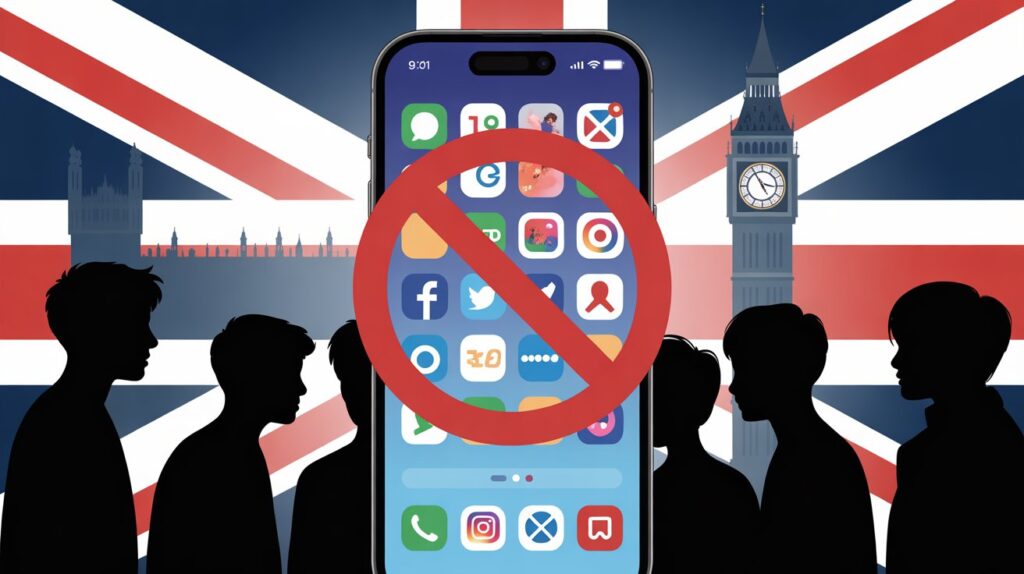
A UK social media ban under 16 is the primary focus of a major new government consultation launched today to protect children online.
This potential ban is the centerpiece of a package of measures designed to safeguard young people’s wellbeing. If implemented, the UK would follow in the footsteps of Australia, which introduced the world’s first social media ban for young people in December 2025.
Technology Secretary Liz Kendall announced the “swift three-month consultation” in a statement to the Commons on Tuesday. “We are determined to ensure technology enriches children’s lives, not harms them—and to give every child the childhood they deserve,” she said.
What is Being Proposed?
The government’s plan goes beyond just a simple ban. The consultation will seek views from parents, young people, and civil society to determine how effective a statutory ban would be. It will also explore:
- Stricter Age Checks: Forcing social media giants to implement robust age verification technologies.
- Curbing Addictive Features: Potentially forcing platforms to remove algorithms and features that drive “compulsive use” among teenagers.
- Phone-Free Schools: A major crackdown on phone use in education. The package will give Ofsted the power to inspect schools’ mobile phone policies, with ministers expecting schools to become “phone-free by default.”
Support from Families and MPs
The move comes after intense pressure from campaigners and politicians. On Sunday, over 60 Labour MPs signed an open letter to Prime Minister Sir Keir Starmer urging him to back a ban.
Among the most powerful voices supporting the measure is Esther Ghey, the mother of murdered teenager Brianna Ghey. In a letter seen by the BBC, she pushed back against arguments that vulnerable children need online communities.
“As the parent of an extremely vulnerable and trans child, I strongly disagree,” Esther wrote. “In Brianna’s case, social media limited her ability to engage in real-world social interactions. She had real friends, but she chose to live online instead.”
Catherine McKinnell, a former school standards minister who signed the letter, told the BBC that parents currently feel “unprepared” to deal with the rapid pace of technological change. She argued that while connection is good, children should not be “bombarded with information sent to you by algorithms devised to create money by tech companies.”
Political Backlash: “Dither and Delay”
While the consultation has been welcomed by many, it has sparked a political row in Westminster. Conservative leader Kemi Badenoch criticized the government’s approach, accusing Labour of copying a Conservative policy announcement from a week ago but failing to act decisively.
“The prime minister is trying to copy an announcement that the Conservatives made a week ago, and still not getting it right,” Badenoch said, dismissing the consultation as “more dither and delay.”
Liberal Democrat education spokeswoman Munira Wilson also urged speed, warning that “this consultation risks kicking the can down the road yet again” while social media giants continue to profit from children’s attention.
Experts and Unions Divided
The education sector has largely welcomed the focus on screen time. Daniel Kebede, general secretary of the National Education Union (NEU), called it a “welcome shift,” noting that teachers see daily how “social media shapes children’s identities and attention long before they sit their GCSEs.”
However, Paul Whiteman of the National Association of Head Teachers (NAHT) warned against the government’s plan to use Ofsted as a “police” force for phones. “School leaders need support from government, not the threat of heavy-handed inspection,” he stated.
Furthermore, not all experts agree that a ban is the silver bullet. The NSPCC and other major charities like Childnet have argued that a blanket ban could be the “wrong solution.” In a joint statement, 42 organizations warned it could create a “false sense of safety” and drive children to darker, less regulated corners of the internet.+1
Professor Amy Orben from the University of Cambridge also cautioned that there is currently “not strong evidence” that age-based bans are effective, suggesting a more balanced approach focusing on safety features and digital literacy might be better.
What Happens Next?
The consultation will run for three months. Depending on the outcome, the government could introduce legislation to enforce the under-16s ban later this year. In the meantime, the House of Lords is preparing to vote on related amendments to the Children’s Wellbeing and Schools Bill, keeping the pressure firmly on the government to act.
news source ; BBC